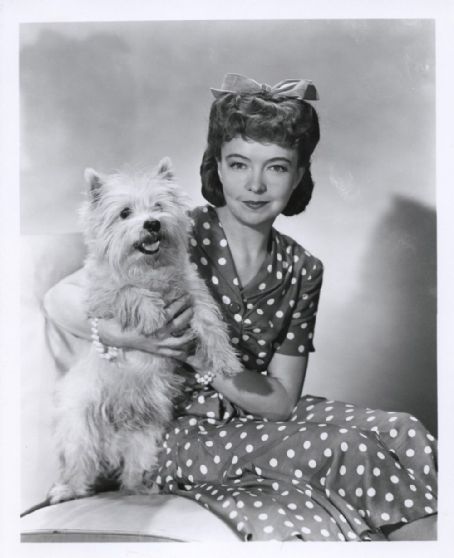
Sally Blane (July 11, 1910 – August 27, 1997)was the sister of actresses Polly Ann and Loretta Young, and half-sister to actress Georgiana Young, the wife of actor Ricardo Montalban. She performed in over 70 movies.
Born in Lynn, Massachusetts on September 9, 1899, Neil Hamilton was a sometime player in stock and a model for Arrow shirts in magazine ads. Neil got his first film role in 1918, but received his big break from D.W. Griffith in The White Rose (1923) with Carol Dempster, one of Griffith’s actresses. Neil also starred with Carol Dempster in America (1924) and Isn’t Life Wonderful? (1924) before he was signed by Paramount in the late 1920’s.
In the late 1920’s, Neil became one of the studio’s most popular leading man. Some of the films he starred during the mid to late 1920’s were Beau Geste (1926), The Great Gatsby (1926) Diplomacy (1926), The Joy Girl (1927) and Why Be Good? (1929).
Neil easily transitioned into sound films in The Love Trap (1929), a part silent, part talkie. He was very busy throughout the 1930’s playing leading man to many female stars of the day like Jean Arthur in The Return of Fu Manchu (1930), Marian Nixon in Ex-Flame (1930), Alice White in The Widow from Chicago (1930), Norma Shearer in Strangers May Kiss (1931), Joan Crawford in Laughing Sinners (1931), Helen Hayes in The Sin of Madelon Claudet (1932), Constance Bennett in What Price Hollywood? (1932) and Two Against the World (1932), Myrna Loy in The Animal Kingdom (1932) Maureen O’Sullivan in Tarzan, The Ape Man (1932) and
Ann Sothern in Blind Date (1934) and many more films until the 1940’s when he couldn’t find A-level work in Hollywood and he was reduced to working in B films.
A staunch Catholic, Neil later claimed that his faith got him through this difficult period. When television came along, Neil hosted Hollywood Screen Test (1948-1953) and did guest shots on numerous series of the 1950’s and 1960’s such as seven episodes of Perry Mason with Yvonne Craig who would go on to play Neil’s daughter in the Batman series of the 1960’s. Neil also appeared in episodes of Perry Mason, 77 Sunset Strip, as well as Maverick, Mister Ed, and The Outer Limits in the 1950’s and 1960’s. Neil is best remembered as Police Commissioner Gordon in the Batman series of the 1960’s, and appeared in all 120 episodes of Batman.
Neil was married to Elsa Whitmer from 1922 until his death in 1984 of an asthma attack. The couple had one son. Neil was actually a distant cousin of Margaret Hamilton, best known for playing The Wicked Witch of the West in The Wizard of Oz (1939).
I think Neil was a versatile actor that was very effective in playing cads as well as romantic leads. I like the way he had a respectable career in silent and pre-code films and a busy career as a character actor after the 1940’s. Neil’s career spanned from 1918- 1971.
Character actor Harry Carey Jr., who performed in many television shows and films including nine with movie director John Ford, has died at age 91 of natural causes. On Thursday morning in Santa Barbara, California, surrounded by family members, said his daughter, Melinda Carey.
Carey's notable big-screen credits include: a co-starring role with John Wayne in the film "3 Godfathers(1948),"(pictured above), She Wore a Yellow Ribbon(1949)," also with Wayne, and decades later in a saloon scene in the 1990 sci-fi comedy "Back to the Future Part III."
Among other Ford-directed films in which Carey performed: "The Searchers" (1956), "Wagon Master" (1950) and "Rio Grande" (1950).
In addition to his movie career, Carey performed many times on television during an era when westerns were popular, in character roles on the shows: "Bonanza," "Gunsmoke" and "Wagon Train" in the 1960s and 1970s.
In the 1950s, he had a recurring role in "The Adventures of Spin and Marty," a series of TV shorts that aired as part of "The Mickey Mouse Club."
Carey was born in 1921, the son of silent film star Harry Carey and his wife, Olive, who also was an actress.
The young Carey was raised on his parents' 1,000-acre ranch in California's Santa Clarita Valley, north of Los Angeles.
Carey, also performed with Wayne in the classic Howard Hawks Western movie "Red River(1948)," which also starred the his father although they had no scenes together.
Among Carey's last screen performances was as the U.S. marshal in the 1993 film "Tombstone," which starred Val Kilmer and Kurt Russell.
Also, a supporting role in the 1997 TV movie "Last Stand at Saber River," which starred Tom Selleck.
The Carey family ranch, which was visited over the years by Wayne, William S. Hart and Gary Cooper, has been turned into a Los Angeles County historic park called Tesoro Adobe.
Now, Voyager (1942). A drama starring Bette Davis, Paul Henreid, and Claude Rains, and directed by Irving Rapper. The screenplay by Casey Robinson is based on the 1941 novel of the same name by Olive Higgins Prouty.
Prouty borrowed her title from the Walt Whitman poem "The Untold Want," which reads in its entirety,
"The untold want by life and land ne'er granted,
Now, voyager, sail thou forth, to seek and find."
The very plain Charlotte Vale, lives in Boston with her domineering, wealthy mother. Believing, Charlotte is on the verge of a nervous breakdown, her sister-in-law Lisa brings psychiatrist Dr. Jaquith to examine her. Jaquith, is convinced that she is, very ill, and he recommends that she be admitted to his sanitarium, Cascade.
Away from her domineering mother, Charlotte recovers quickly, but not really wanting to return home, accepts Lisa's invitation to go on a long cruise. On board the ship, the now very stylish Charlotte is introduced to Jerry Durrance.
The two spend the day sight-seeing and the married Jerry asks Charlotte, to help him choose gifts for his two daughters. Touched when Jerry thanks her with a small bottle of perfume, she tells him about her family and her breakdown. She later learns from his friends, Deb and Frank McIntyre, that Jerry is unhappily married but will never leave his family.
After the ship docks in Rio de Janeiro, Jerry and Charlotte miss getting back on the boat and Charlotte stays with Jerry in Rio for five days before flying to Buenos Aires to rejoin her cruise.
Even though they have fallen in love, they promise not to see each other again. Back in Boston, Charlotte's family is shocked by her transformation. Her mother, is determined to regain control over her daughter.
Charlotte, receives a bouquet of camellias with no card... she knows the flowers are from Jerry because he had called her "Camille," and, reminded of his love, she is able to stand up to her mother.
Charlotte becomes engaged to the widower Elliot Livingston. One night, at a party, Charlotte runs into Jerry, who is now working as an architect. His youngest daughter Tina is now seeing Dr. Jaquith, for her emotional problems. Charlotte tells Jerry, not to feel guilty over their affair, because she gained strength from knowing that he loved her.
Charlotte, now realizes that she could never love Elliot and they break off their engagement, angering Mrs. Vale that during an argument with Charlotte, she has a heart attack and dies.
Feeling Guilty, Charlotte returns to Cascade, where she meets Tina. Seeing herself in the girl, Charlotte takes charge of her. When Tina's spirits improve, Charlotte takes her home to Boston.
Later, Jerry and Jaquith visit them and Jerry is very happy in the wonderful change in Tina. Charlotte tells him that she is only able to keep Tina with her on condition that she and Jerry end their affair. Jerry then asks if Charlotte is happy and she says.. "Well, Jerry, don't let's ask for the moon; we have the stars."
Fun Facts:
Edmund Goulding was first attached to the project as director. He wanted Irene Dunne to play Charlotte Vale. When Goulding fell ill, however, the project passed to Michael Curtiz, who had either Norma Shearer or Ginger Rogers in mind for the lead. In the meantime, Bette Davis was lobbying hard for the part. She was able to convince producer Hal B. Wallis that she would make a perfect Charlotte Vale, but she refused to work with Curtiz. Consequently Irving Rapper landed the director's job.
The biggest box office hit of Bette Davis's career.
Paul Henreid's act of lighting two cigarettes at once caught the public's imagination and he couldn't go anywhere without being accosted by women begging him to light cigarettes for them.
"Now Voyager" was actually the third book in a four-part saga of the Vales, a high-class Boston family, written by Olive Higgins Prouty over a 12-year period from 1936 to 1947. When Warner Brothers bought the film rights to the novel, Prouty wrote a lengthy letter to her literary agent, setting out how she felt the production should be mounted. She felt strongly that the best way to dramatize the flashbacks would be to feature short silent segments woven into the main sound narrative. Her letter made its way to producer Hal B. Wallis at Warners, who subsequently ignored her suggestions.
Claude Rains initially turned down the Jaquith role, finding it too insubstantial. The part was built up for him and he was paid $5000 a week for six weeks' work.
Filming went a few weeks over schedule, which in turn caused some conflicts with Casablanca, which also starred Claude Rains and Paul Henreid. Rains finished work on this movie June 3rd in 1942 and did his first scene on Casablanca at 10:30 the next morning.
All Bette Davis fans will love this film. She truly was an actress that knew how to pull on your heart strings. She had the power to transform herself into the many strong women she played. The transformation of the plain Charlotte to the stylish woman, is something that a lot of girls can relate to.
The rest of the cast was excellent: Claude Rains, Gladys Cooper, Bonita Granville and Ilka Chase.
Ilka Chase (April 8, 1900 - February 15, 1978) was an actress and novelist, born in New York City and educated at convent and boarding schools in the United States, England, and France, she was the only child of Edna Woolman Chase, the editor in chief of Vogue magazine, and her first husband, Francis Dane Chase.
Chase made her society debut in 1923 and her Broadway debut a year later in, The Red Falcon. Her stage performances include: Days Without End, Forsaking All Others, While Parents Sleep, On to Fortune, Tampico, Co-Respondent Unknown, Revenge With Music, Keep Off the Grass and In Bed We Cry, which was an adaptation of her novel of the same name.
She was in the first Broadway cast in the play, The Women (1938) and later performed in the play, Barefoot in the Park.
Her films: Fast and Loose, Once a Sinner, The Animal Kingdom, The Big Knife, and Now, Voyager.
For several years, she was host of a radio program, Luncheon at the Waldorf.
In 1957, she performed the role of the Stepmother in the television production of Rodgers and Hammerstein's Cinderella, which starred Julie Andrews.
Her last movie performance was in, Ocean's 11 (1960) as the mother of the Peter Lawford character. Chase made a rare television sitcom appearance as "Aunt Pauline" on The Patty Duke Show.
Personal Quote: I never approved of talkies. Silent movies were well on their way to developing an entirely new art form. It was not just pantomine, but something wonderfully expressive.
Black Widow (1954). A mystery/drama, written, produced and directed by Nunnally Johnson Cast: Van Heflin, Ginger Rogers and Gene Tierney.
Just before famous actress Iris leaves on a trip, she has her Broadway producer husband Peter Denver, promise that he will attend a cocktail party being held by Carotta Marin, the star of his new show.
Peter does not feel much like going, because he really does not care for Lottie. At the party he meets Nancy Ordway, a 20 year old hopeful writer who was not invited. Wanting to leave the party early Peter invites Nancy to dinner and promises her that his intentions are strictly platonic.
That night, when Peter talks to Iris on the phone about the party he tells her about having dinner with Nancy. Iris believes that Nancy is only looking for a writing job with Peter .
Nancy finds a waitress job at Sylvia's Cafe, where, she meets famous artist Claire Amberly and her law student brother, John. Claire moves into her apartment and begins dating John.
Later, Nanny visits the theater where Gordon is working, but.. Gordon has left for the day, Nancy meets Brian, who charms her. He brags to her that he is married to a famous actress.
Ten days after she met Peter at the cocktail party, Nancy calls him at his office, he takes her on another dinner date. After dinner, Peter and Nancy go to his and Iris's beautiful apartment, where Nancy says that she wants to be a famous writer. Nancy thinking she can work better in such a beautiful apartment, Peter, allows her to work there during the day, while he is at work. Things take a turn for the worse and he finds out Nancy is not as innocent as she appears to be.
Very impressive cast and this film may remind you a little of All About Eve. I'm not really a fan of Heflin but he did ok in this film. It was fun to see Rogers playing the diva wearing the pants in her marriage, but I have to say she looks fabulous. Tierney, my favorite actress gets a few good scenes. Raft, makes the perfect detective. One of the things that caught my attention was, the witness from the movie theater who later in life became TV producer Aaron Spelling.
The Left Hand of God (1955). Drama film directed by Edward Dmytryk. Based on the novel The Left Hand of God by William Edmund Barrett. Cast: Humphrey Bogart and Gene Tierney, with a supporting cast including Lee J. Cobb, Agnes Moorehead, E. G. Marshall, and Carl Benton Reid.
After American Plot Jim Carmody, crashes his plane in China, he was rescued by a warlord, General Yang and becomes his trusted adviser. After one of the soldiers kills the priest, Father O'Shea, Carmody decides to masquerade as the dead priest and makes his escape. There he meets missionaries Beryl and David Sigman.
Still posing as the priest, he falls in love with a mission nurse named Anne Scott. Carmody writes to the bishop, confessing that he is an impostor.
Then General Yang arrives, insisting that Carmody rejoin his army or else he will burn down the village. Carmody challenges him in a game of dice, will he win his freedom and the safety of the villagers?
Video: 1 of 6.
The Return of Frank James (1940). Western. Director: Fritz Lang. Cast: Henry Fonda and Gene Tierney.
It is a sequel to Henry King's (1939) Jesse James. Written by Sam Hellman.
After the Minnesota robbery, several members of their gang are killed, the James brothers decide to split up and Frank travels on to Missouri. Frank changes his to name Ben Woodsen, and becomes a farmer with his friends, Pinky and Clem.
It is not long, when Frank hears that his brother Jesse has been shot in the back by one of the Ford brothers, who has been sentenced to hang for their crime. Frank decides it is better to let the law deal with the Fords, until he reads that they have been pardoned and awarded money.
Wanting them to pay for the murder of his brother, Frank goes looking for the Fords, who have headed West. Frank needing money robs the railroad express office, saying that it was the railroad who killed his brother.
Things start to get complicated when Clem insists that he join up with Frank. In the gunfight, the watchman is killed and Frank is accused of the murder. McCoy, the head of the railroad, offers a reward for Frank, and his gang. George, follows the gang West, knowing that Frank will be hot on their trail.
After reaching Denver, Frank and Clem come up with the story of Frank's death, which is picked up by newspaper reporter Eleanor Stone and printed in her father's paper.
Eventually, Frank learns that his friend, Pinky has been arrested and is about to be hung. Frank, now has to decide what is more important getting the Fords or helping Pinky.
I think my favorite part of the film were the courtroom scenes, where Frank is being judged, by a very partial jury.
Fun Facts:
The studio changed the facts for entertainment. Frank surrendered 6 months after Jesse James' murder, both Ford brothers were already dead and Frank had nothing to do with their deaths.
The original script had Frank romantically involved with the reporter played by Gene Tierney, but the studio was worried of a possible lawsuit by Frank's widow and/or son, so it was eliminated from the script.
Where the Sidewalk Ends(1950). Noir. Director and produced by Otto Preminger. The screenplay for the film was written by Ben Hecht, and adapted by Robert E. Kent, Frank P. Rosenberg, and Victor Trivas. The screenplay and adaptations were based on the novel Night Cry by William L. Stuart. Cast: Dana Andrews, Gene Tierney, Karl Malden and Gary Merrill.
New York City Police Detective Dixon, who's already in trouble with his superiors for his interrogating methods. Accidentally hits Paine in self-defense and kills him. Dixon dumps Paine's body in the river, and is later assigned to find his killer. Dixon tries to place the blame on an old gangster, Tommy Scalise, but.. somehow the blame for the killing points to cab driver Jiggs Taylor. Because he had reasons to want his abusive son-in-law dead.
During the investigation Dixon falls in love with Jigg's daughter, Morgan Taylor-Paine. Dixon tries to clear the cab driver without implicating himself. Unfortunately, things start to get too complicated. Detective Lt. Thomas, is convinced that the cab driver is the killer. In an attempt to save the cab driver and blame Scalise, Dixon becomes involved in a shoot-out which leaves Scalise dead and Jiggs is cleared of all charges.
Will Dixon ever decide to do the right thing?
I thought Where the Sidewalk Ends, is one of the best detective films of the 50's.
Fun Fact:
This is the last in a series of films that Otto Preminger made for Twentieth Century Fox in the 1940's. The series includes "Laura", which also stars Gene Tierney and Dana Andrews, "Whirlpool", and "Fallen Angel".
Belle Starr (1941). Director: Irving Cummings. Based on the life of outlaw Belle Starr. Cast: Gene Tierney, Randolph Scott and Dana Andrews.
After her family's mansion is burned down by Yankee soldiers for hiding Captain Sam Starr, Belle Shirley promises to take revenge. Breaking Starr out of prison, she joins his group who make plans to attack banks and railroads and enemy troops. Belle and Sam are married and trouble begins when Sam lets a couple of ruthless men into the gang.
I remember seeing this film many years ago and fell in love with it. I have always liked civil war films. Gene Tierney is beautiful as always, but..did not care much for her southern accent throughout the film. Randolph Scott is wonderful as captain Sam Starr. I do not want to give the ending away.. Good performances at end.
Fun Fact:
Originally, Alice Faye was to play the title role.
Night and the City (1950). Is a film noir directed by Jules Dassin and starring Richard Widmark and Gene Tierney. It is based on the novel of the same name by Gerald Kersh. Shot on location in London, the plot revolves around an ambitious hustler whose plans keep going wrong.
The picture is considered a classic of the film noir genre. Director Dassin later confessed that he never read the novel the movie is based upon. In an interview appearing on The Criterion Collection DVD release, Dassin recalls that the casting of Tierney was in response to a request by Darryl Zanuck, who was concerned that personal problems had rendered the actress "suicidal," and hoped that work would improve her state of mind.
The film's British version was five minutes longer, with a more upbeat ending and featuring a completely different film score. Dassin has endorsed the American version as closer to his vision.
Forty Guns (1957). A western film written and directed by Samuel Fuller. Cast: Barbara Stanwyck, Barry Sullivan and Gene Barry.
Reformed gunslinger and now a lawman Griff Bonnell and his brothers Wes and Chico arrive in an Arizona town. They are looking to arrest Howard Swain for mail robbery.
Swain, is one of landowner Jessica Drummond’s hired guns.
She runs the territory and her brother, Brockie Drummond, who is a drunken and bully, who shoots and kills Marshal Chisolm in cold blood.
Wes, falls in love with Louvenie Spanger and then decides to settle down and become the town's sheriff. Griff, falls in love with Jessica after she is dragged by her horse during a storm.
Logan and Savage, try to ambush of Griff in an alley. He is saved by youngest brother Chico, who kills Savage. Jessica's brother and hired guns try to turn the town against the Bonnell brothers.
On his wedding day, Wes is killed and Brockie is jailed for the murder. He tries to escape by using his sister as a shield, daring Griff to shoot ... which Griff does.. only wounding Jessica. Brockie, is the first man Griff has had to kill in 10 years.
Chico, decides to take the sheriff's job. Griff, believes that Jessica hates him for killing her brother, but he maybe in for a surprise.
The Maverick Queen(1956). A Pinkerton detective goes undercover to investigate a gang of thieves whose boss is a lady saloonkeeper.
Video one of ten.
The Violent Men(1955). A Western/drama directed by Rudolph Mate. Cast: Glenn Ford along with Barbara Stanwyck, Edward G. Robinson, Brian Keith and Diane Foster. Based on the novel Smoky Valley by Donald Hamilton.
Union Army ex-officer Parrish, wants to sell his land and move east with his fiancee, Caroline, but the low price offered by Lew Wilkison and after one of Parrish's men is murdered, he changes his mind about leaving.
Things become more complicated when the evil owner's wife, Martha, has taken up with his brother, Cole, who has a Mexican spy in town.
When Wilkisons' daughter, Judith, comes to see what her family has done she decides join forces with Parrish and make things right with the cattlemen in their small town.
Trooper Hook (1957). After Indian warriors kill a troop of soldiers, Sergeant Hook captures them and their chief Nanches. Among the prisoners is Nanches' son and the boy's white mother. Hook's, job is to escort the mother and son back to the woman's husband. Traveling by stagecoach, they learn that Nanches, has escaped and that he and his warriors and are planning to take back his son.
The Moonlighter(1953). A Western film starring Barbara Stanwyck and Fred MacMurray. A cattle rustler escapes a lynch mob and returns to his life of crime. His ex-girlfriend is deputized and vows to bring him to justice.
Annie Oakley (1935). Annie Oakley is a 1935 biographical film about the life of Annie Oakley. It stars Barbara Stanwyck in the title role and Preston Foster.
The story begins when Annie Oakley delivers six dozen quail she has shot to the owner of the general store. He sends them to the MacIvor hotel in Cincinnati, where the mayor is holding a dinner to honor Toby Walker, the "greatest shot in the whole world".
At the dinner Jeff Hogarth makes Walker, part of Buffalo Bill's Wild West Show. MacIvor arranges for "Andy" Oakley to compete against Walker. The contest ends up in a tie, so they compete to sudden death. The two sharpshooters continue hitting their targets. Oakley's mother tells her to deliberately miss her next shot.
When the Oakleys return home, Annie promises to pay back all those who bet on her. Hogarth shows up and tells Annie that he never bet her money. He then invites her to join the Wild West Show. Oakley, having developed a crush on Walker, jumps at the chance.
Later, Walker overhears Buffalo Bill telling Hogarth that he might have to fire Oakley, because she lacks showmanship, he teaches her some 'fancy shootin' tricks.
At the first show, Chief Sitting Bull is in the audience with his translator, Iron Eyes Cody. Ned Buntline, Buffalo Bill's publicist, tries to sign him up for the show, but the chief is bored with the acts.. until he sees Annie, shoot five targets thrown in the air.
Oakley and Walker fall in love, despite Hogarth, who also has feelings for Oakley.
One day, Walker grabs a man's gun just as it goes off, saving Sitting Bull's life. His eyes are damaged by the closeness of the shot. He hides his injury, but ends up shooting Oakley in the hand and is fired from the show. Oakley, heartbroken cannot forget him. After touring Europe, the show travels to New York City, Walker's home town. Will the couple find each other and get back together?
Night Nurse (1931). Pre-Code, crime/drama/mystery directed by William A. Wellman. Cast: Barbara Stanwyck, Ben Lyon, Joan Blondell, Clark Gable, and Vera Lewis.
Lora Hart applies for a job as a trainee nurse in a hospital, but is rejected for not having graduated from high school. Fortunately, a meeting with the hospital's chief of staff, Dr. Arthur Bell she is hired. Lora's roommate and fellow nurse, Miss Maloney, becomes her best friend.
One day, Lora treats bootlegger Mortie, for a gunshot wound and they become friends when she does not report him to the police.
Later, Lora is hired for a private case, taking care of, Desney and Nanny Ritchie at the mansion of their alcoholic mother, where there is always a party going on. When a drunk guest makes a pass at her, the chauffeur Nick knocks him out. When she refuses his demand to pump out the stomach of a very drunk Mrs. Ritchie, he knocks Lora out and takes her to her room.
Lora, becomes concerned about the children's treatment prescribed by Dr. Ranger. She sees that the children are being slowly starved to death, but she can not get anybody to believe her. She quits and takes her suspicions to Dr. Bell. He advises her to return to the house so she can get more proof.
Nanny Ritchie becomes so weak, that Lora fears for her life. By chance, her friend Mortie is making a booze delivery to the mansion. Desperate, Lora sends Mortie for milk for a bath for the child. The worried housekeeper Mrs. Maxwell, confides to Lora that Nick and Dr. Ranger, both want the children out of the way in order to get at their trust fund.
Dr. Bell shows up and examines the little girl, but when Bell tries to get the child to the hospital, Nick punches him. Will Dr. Bell be able to save the child's life in time?
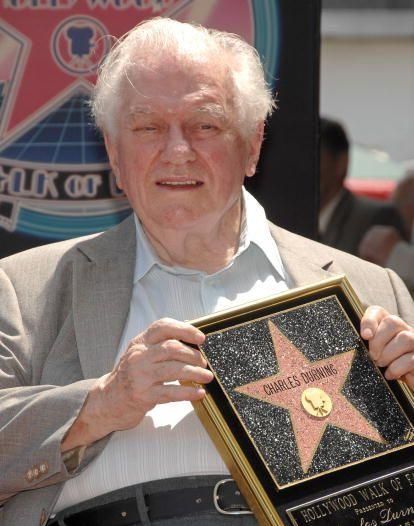
Charles Durning (February 28, 1923 – December 24, 2012). Was a character actor with performances in over 100 films died on Christmas Eve, according to his family. Durning's best known roles: police officers in the Oscar-winning The Sting (1973) and crime drama Dog Day Afternoon (1975), along with the comedies Tootsie, To Be Or Not To Be and The Best Little Whorehouse in Texas, the last two of which earned him Academy Award nominations for Best Supporting Actor.
Durning, left home at age 16 and later enlisted in the Army. Durning landed at Normandy on D-Day and fought in the Battle of the Bulge, receiving the Silver Star and three Purple Hearts.
He worked odd jobs that ranged from professional boxing to teaching ballroom dancing to ushering in a burlesque house, where he got his start on stage by filling in for a comic who failed to show up.
He also attended the American Academy of Dramatic Arts.
Some of Durning's other best-known roles included his Tony-winning performance as Big Daddy in "Cat on a Hot Tin Roof", the governor in "Best Little Whorehouse in Texas", a beleaguered police officer in "Dog Day Afternoon" and as Doc Hopper, the owner of a frog leg restaurant in "The Muppet Movie."
Durning's family, in a statement issued Tuesday, said, "Not only was Charlie a World War II hero but he was also a hero to his family. Charlie loved Christmas and if he could have chosen a time to pass, he would have chosen this day."
Please Don't Eat the Daisies (1960). Comedy. Cast: Doris Day and David Niven. Director: Charles Walters. Produced by Joe Pasternak, with Martin Melcher (Day's husband) as associate producer. The screenplay, partly inspired by the book of the same name by Jean Kerr, a collection of humorous essays, was by Isobel Lennart. The film also features Janis Paige, Spring Byington, Richard Haydn, Patsy Kelly, and Jack Weston. A television series starring Patricia Crowley and Mark Miller premiered five years later and ran for 58 episodes.
Drama professor, Lawrence Mackay, first job, as as a New York newspaper theater critic, is to review his old friend, producer Alfred North's, new Broadway musical.
On opening night, Larry's wife Kate, is visited by wannabe, playwright and cab driver, Joe Positano, who wants Larry to read his play. After Kate tries settling down her four boys, with no luck.. agrees to tell Larry about the play.
Kate meets up with Larry, while is giving his last lecture as a professor, knowing he has become a critic, his students believe he will put down every performance he reviews, just to help his own career.
Alfred's new show is terrible, Larry feels guilty, that he has to tell the truth about his friend's play.
The next morning, Alfred runs over to the apartment upset about the review, Larry tries to calm his friend.
Later, while Larry and Kate have breakfast at a restaurant, Deborah Vaughn, the star of Alfred's show, walks in and slaps Larry in front of a cameraman who captures the moment on film.
Soon the picture makes front-page headlines and Larry, decides to publish a column with the photo claiming the shows popularity failed, not because of Deborah's bad performance but on her derriere.
Days later at a cocktail party, Larry is the center of attention while Kate is ignored. When Deborah arrives at the cocktail party, she heads straight over to Larry to apologize hoping that he will reconsider his opinion of her derriere. As Kate prepares to leave the party, Alfred warns Kate that Larry is on his way to the "downelator" becoming a critic who thinks his own jokes are better than any play. As they leave, Larry makes fun of the play opening that evening.
At home after seeing the play, angry/worried Kate asks Larry if he disliked the play before seeing it. Larry promises to her he had given the play an honest review.
Days later, as Larry reads Joe's biblical play and criticizes him for writing about a subject he does not know anything about. Offended, Joe tells Larry that he is not the same man he used to be and storms out.
Soon after, Larry and Kate learn that the lease on their apartment is about up and talk about their plans to move to a large house outside the city. Now, that Larry is a success, he wants to live in the city. Using her feminine wiles, Kate agrees that his work comes first and calls the entire family a "parasite". Larry charmed by her agrees to the move.
With not many choices in their price range, the family moves into a huge fixer upper of a house in Hooten, 70 miles outside New York. When Community leaders ask Larry and Kate to help them find a play for the local theater group, Larry says that he has no time.
Later in the city, Deborah finds Larry and makes a pass at him, but Larry refuses and then returns home.
On the children's first day of school, Larry refuses to volunteer, claiming the school is performing "moral blackmail."
The next day, when community leaders once again ask for a suggestion on a play, Kate calls Alfred for help. Alfred sees an opportunity to get even with Larry. Will he be successful getting even with Larry?
This is one of my favorite Doris Day movies. I feel it captures her best performances as a mother. Doris interaction with the children is hilarious, she's so natural with them.
And of course, the musical numbers are fluffy, but that was what we loved about her. Niven makes a wonderful husband for Doris. I also loved Janis Page performance in this film as she was the top billed female in Doris first film, Romance on the High Seas. Spring Byington is fantastic as the grandmother. I think Anyone who loves Doris Day will also say this one of their favorite movies.
Fun Facts:
The musical number Kate rehearses for the amateur show ("Any Way The Wind Blows," music by Marilyn Hooven and Joseph Hooven, lyrics by 'By Dunham') had been written for Doris Day movie, Pillow Talk (1959).
After Doris Day and Janis Paige first had worked together in Romance on the High Seas (1948), Miss Paige performed on Broadway as, Babe Williams, in the Tony Award-winning musical of 1954, "The Pajama Game."
When Warner Bros., the former home lot of Janis and Doris, recast Babe Williams for the delightful 1957 film version, Babe then turned into - Doris Day!
Beginning her film career portraying Katharine Hepburn's mother in Little Women (1933), Spring Byington closed her movie years playing Doris Day's mother in this film.
Please Don't Eat the Daisies is a collection of funny essays by playwright Jean Kerr about suburban living and raising four boys. The essays do not have a plot or through-storyline, but the book sold so well it was later adapted into a film starring Doris Day and David Niven. The film was later adapted into a television series starring Patricia Crowley and Mark Miller.




.jpg)