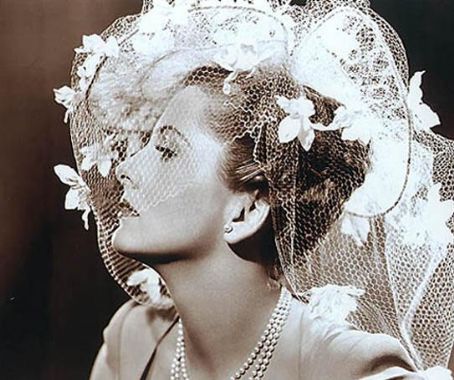
Showing posts with label joan fontaine. Show all posts

Wednesday, June 26, 2013

Rebecca(1940).


Rebecca (1940). Psychological/dramatic/thriller directed by Alfred Hitchcock. Cast: Laurence Olivier, Joan Fontaine and Judith Anderson. The film won two Academy Awards, including Best Picture, out of a total 11 nominations. Olivier, Fontaine and Anderson were all Oscar nominated for their roles. Since the introduction of awards for actors in supporting roles, this is the only film named Best Picture that won no other Academy Award for acting, directing or writing.


Maxim de Winter, is vacationing in Monte Carlo, trying to forget the drowning death of his wife Rebecca. He meets and begins dating the shy and plain paid companion of a matronly socialite. She is thrilled when Maxim asks her to be his wife.


The new Mrs de Winter happiness quickly comes to a end when Maxim takes her to his beautiful seaside estate, Manderley. There she is tormented by the housekeeper, Mrs. Danvers, who continually reminds her of the great beauty of the first Mrs. de Winter and she also tries talking her into leaping to her death.


The new Mrs de Winter, believes that Maxim is still in love with "Rebecca". Trying to please her husband Mrs de Winter convinces Maxim to hold a costume party. While deciding what to wear, Mrs Danvers suggests she copy the beautiful outfit in the portrait of Caroline de Winter. As she is coming down the stairs at the party making her grand entrance, Maxim sees her dress and is appalled. It turns out... "Rebecca" wore the same outfit to a ball, shortly before she died. When the new Mrs de Winter confronts Danvers, she tells her she can never take Rebecca's place.

When a boat is wrecked off shore and during the rescue, another submerged boat is found in which the body of Rebecca is found. Maxim then confesses the true story of his marriage to Rebecca:

After four days of marriage, Rebecca began sharing her infidelities. Heartbroken but proud, Maxim continued on with his marriage, until she informed Maxim that she was going to have a baby and he was not the father. Maxim hit Rebecca and she fell, hitting her head. He then placed her body in a boat and sunk it. Things do not look good for Maxim until a surprise twist at the end.

Video:


Fun Facts:

Mrs. Danvers is hardly ever seen walking; she seems to glide. Alfred Hitchcock wanted her to be seen solely from Joan Fontaine's character's anxious point of view, and this effect tied in with her fear about Mrs. Danvers appearing anytime unexpectedly.

Over 20 actresses were tested for the role of Mrs. de Winter, which eventually went to newcomer Joan Fontaine. One of them was Vivien Leigh, who Laurence Olivier was pressing for, as they were a couple at the time.

Despite scouring most of America, and New England in particular, David O. Selznick was unable to find a suitable location to represent Manderley, so he had to resort to a miniature instead.

In her autobiography, Maureen O'Hara states that she was the first choice for the lead role.

The novel was bought by David O. Selznick for $50,000 as a vehicle for Carole Lombard with the idea that he would attempt to get Ronald Colman for the male lead. According to Selznick's memos, when Colman put off accepting the part because he was afraid that the picture would be a "woman starring vehicle" and because of the murder angle, Selznick turned to his second choices for the role, Laurence Olivier and William Powell. Olivier was willing to work for $100,000 less than Powell and so he was chosen. Leslie Howard was also considered for the part.

Anne Baxter was one of the actresses tested by Alfred Hitchcock for the leading role. He later cast her in I Confess.

Because Laurence Olivier wanted his then-girlfriend Vivien Leigh to play the lead role, he treated Joan Fontaine horribly. This shook Fontaine up quite a bit, so Alfred Hitchcock decided to capitalize on this by telling her EVERYONE on the set hated her, thus making her shy and uneasy - just what he wanted from her performance.

David O. Selznick wanted Olivia de Havilland to play the female lead, but was faced with insurmountable problems: she was already committed to Samuel Goldwyn for Raffles, Warner Bros. was being uncooperative about lending her out, and she was reluctant to accept the part because her sister, Joan Fontaine, was also under consideration for the part and her agent, Leland Hayward, was promoting his wife, Margaret Sullavan, for the role. Selznick also considered Loretta Young, Vivien Leigh, Anita Louise and Anne Baxter for the role, but felt that Young and Leigh were the wrong "type." He finally settled on Fontaine, but his staff disagreed with his decision because she was not yet an established star.


Director Cameo:  Alfred Hitchcock: walking past a phone booth just after Jack Favell (George Sanders) makes a call in the final part of the movie. There are photos showing Hitchcock standing beside the phone booth looking at Mr Sanders. Actually the scene isn't played that way and you have to be quick spotting Hitchcock, quickly passing by in the background while Sanders is discussing a parking matter with a police man. Sanders having only been seen in close up while talking on the phone.

I love all the surprising plot twists and turns and the amazing cast. Even the supporting cast was amazing, especially the creepy Mrs. Danvers.  "Rebecca," is one of the best Hitchcock movies ever made. One thing that surprises me is.. I do not think the movie ever mentions Joan Fontaine's characters name. Even the house seems creepy..


Nigel Bruce (4 February 1895 – 8 October 1953), began his acting career by performing on stage and later performing in silent films.

In 1934, he moved to Hollywood, where he typically played buffoonish, fuzzy-minded gentlemen. During his film career, he worked in 78 films, including: Treasure Island (1934), The Scarlet Pimpernel (1934), The Trail of the Lonesome Pine (1936), The Charge of the Light Brigade (1936), Rebecca (1940), Suspicion (1941), Lassie Come Home (1943) The Corn Is Green (1945).


Bruce participated in two landmark films: Becky Sharp and Bwana Devil.

He uncharacteristically played a bad guy in, The Rains Came(1939) which became the first film to win an Oscar for special effects.

Bruce's best known character was as Dr. Watson in the 1939-1946 Sherlock Holmes film series with close friend Basil Rathbone as Holmes. Bruce starred as Watson in all 14 films of the series and over 200 radio programs of The New Adventures of Sherlock Holmes. Although Watson often appears to be the older of the two main characters, Bruce was actually three years younger than his co-star Rathbone.

Nigel Bruce was married from 1921 until his death to British actress Violet Campbell (Violet Pauline Shelton; 1892–1970) whom he always lovingly called "Bunny", they had two daughters, Jennifer and Pauline.

His final film, World for Ransom, was released posthumously in 1954. Bruce died from a heart attack at the  age of 58.

Friday, April 26, 2013

The Women (1939).


The Women(1939). Comedy/drama directed by George Cukor. The film is based on Clare Boothe Luce's play of the same name, and was adapted for the screen by Anita Loos and Jane Murfin, who had to make the film acceptable for the Production Code. Cast: Norma Shearer, Joan Crawford, Rosalind Russell, Paulette Goddard, Joan Fontaine, Lucile Watson, Mary Boland, and Virginia Grey, Marjorie Main and Phyllis Povah, the last two of whom reprise their stage roles from the play. Florence Nash, Ruth Hussey, Virginia Weidler, Butterfly McQueen(debut), and Hedda Hopper also appeared in smaller roles.


While having her nails painted "jungle red," as the catty Sylvia Fowler learns from Olga, the manicurist, that her good friend Mary Haines's husband Stephen, is having an affair with perfume clerk Crystal Allen.

Mary is hosting a luncheon that afternoon and Sylvia cannot wait to spread the gossip among their friends. When Stephen calls to cancel a trip they had been planning, making matters worse.

Sylvia,recommends Olga to Mary for a "jungle red" manicure, who shares with her the details of Stephen's affair, not realizing that Mary is Mrs. Haines.


Mary's mother, Mrs. Morehead, advises her daughter to keep silent, but during a fashion show, Mary unexpectedly meets the gold digger Crystal. Sylvia, loves that the confrontation made the society columns front page.

Heartbroken, Mary, now facing every woman's nightmare, wants a divorce and travels by train to Reno. While on the train, Mary meets her friends, Peggy Day, Miriam Aarons and Flora, the Countess De Lave, as they all travel to Reno to get their divorces.

Soon after arriving at a dude ranch for women, they are joined by Sylvia, who has just been left by her husband for Miriam.

On the day that Mary's divorce is to become final, Miriam tells her to forget her pride and take back her husband, but Mary is too late, as Stephen is planning to marry Crystal.


Two years later, Crystal, now bored with Stephen, begins an affair with singing cowboy Buck Winston, the countess' young husband.

Mary is still in love with her ex-husband Stephen, and becomes hopeful when her daughter, Mary, shares with her mother that her daddy is not happy with his new wife.

Deciding to fight for Stephen.. Mary, tricks Sylvia, who has become friends with Crystal, into publicly exposing Crystal's affair. Will Stephen and Mary, reconcile and get back together?


Fun Facts:

No doubles were used in the fight scene where Rosalind Russell bites Paulette Goddard. Despite the permanent scar resulting from the bite, the actresses remained friends.

Sydney's, the beauty salon, was named after Sydney Guilaroff, the chief hairstylist at MGM from 1934 to the late 1970's. He was brought to MGM from New York at the request of Joan Crawford.

According to her autobiography, Rosalind Russell called in sick because Norma Shearer refused to share top billing. She stayed "sick" until Shearer finally relented.

Myrna Loy and Greta Garbo were the only top-tier female stars at MGM who did not star in this film, although Loy was considered for the role of Crystal Allen.

My favorite scenes in this highly entertaining film: the fight scene with Goddard and Russell, the bath scene with Crawford and last scene when all the woman get into a cat-fight at the ball. With beautiful costumes designed by Adrian.

Phyllis Povah (July 21, 1893 – August 7, 1975), made her Broadway theatre debut in Mr. Pim Passes By in 1921 and acted in minor roles in several productions over the next two decades.

She achieved a notable success in a featured role in the stage production of The Women, and the play ran for 18 months, from 1936 until 1938.

When a film version was planned, Povah and Marjorie Main were the only members of the cast who were chosen to reprise their roles in the film which was released in 1939. (The film was directed by George Cukor).

The film was a success, but Povah continued to work steadily in theatre, and appeared in the film Let's Face It (1943) with Bob Hope and Betty Hutton.

Dear Ruth, in which Povah starred with John Dall and Virginia Gilmore played on Broadway from 1944 until 1946, and provided her with a substantial role and her biggest success during the 1940s.

She made two films in 1952, The Marrying Kind with Judy Holliday and Aldo Ray, and Pat and Mike with Spencer Tracy and Katharine Hepburn, both directed by George Cukor.

Her final Broadway role was in Anniversary Waltz with MacDonald Carey and Kitty Carlisle in 1954 and 1955.

The film version, re-titled Happy Anniversary (1959) and costarring David Niven and Mitzi Gaynor, was her final film.

She died from a heart attack in Port Washington, New York, aged 82.


Friday, June 8, 2012

The Constant Nymph(1943).


The Constant Nymph(1943). A romantic drama. Cast Charles Boyer, Joan Fontaine, Alexis Smith, Brenda Marshall, Charles Coburn, May Whitty, and Peter Lorre. It was adapted by Kathryn Scola from the Margaret Kennedy novel and play by Kennedy and Basil Dean, and directed by Edmund Goulding.

After, composer Lewis Dodd's latest symphony does not go over very well in London, he goes to visit an old friend musician, Albert Sanger. One of Sanger's four daughters Tessa,  falls in love with Lewis and dreams of helping him follow his dream as a composer.

The very ill Sanger has kept his daughters away from society and now worries about what is to become of them. He asks Lewis to inform the girls wealthy uncle, Charles Creighton, if he dies. When the girls play a  song that Lewis wrote for them, Sanger tells Lewis that, the beautiful melody is better than his more intellectual work.

Some time later, Sanger dies. Lewis sends for Creighton, who arrives with his beautiful daughter Florence and Kate travels to Milan to study music and Toni marries wealthy Fritz Bercovy. Lewis and Florence fall in love and when they announce their engagement, the frail heartbroken Tessa faints after hearing the news. Creighton arranges for Tessa and Paula to attend school in England and Lewis and Florence marry.

Six months later, Lewis is frustrated by Florence trying to take over his career and the couple quarrel constantly. When Tessa and Paula run away from their school, Lewis leaves to look for them, not attending the party that Florence has planned to introduce him to her friends. Lewis, later finds them home waiting for him. Paula leaves to join Fritz and Toni, who is pregnant and Tessa stays with Florence and Lewis. When Tessa hears Lewis' latest composition, based on the song that he wrote for her and her sisters, she believes it is not his best work.

Later, Tessa encourages Lewis to put sentiment back into his music and with Tessa's help, Lewis changes his composition. Florence,  now knows that Tessa is her rival and  tries to get rid of her. The night of the first performance, Lewis realizes that he is in love with Tessa and asks her to go away with him, but Tessa refuses because he is married to her cousin. The excitement of Lewis' proposal and the premiere of his composition causes Tessa to have another fainting spell, and Florence insists that Tessa stay home, rather than attend the concert. Will Lewis' concert go well and will Florence decide to let him go?

Fun Fact: Alfred Hitchcock was considered for directing this film. Hitchcock's wife Alma Reville was one of the writers of The Constant Nymph 1928 version.


 A very romantic film, with beautiful music by Erich Korngold. Alexis Smith as the unloved wife gives a perfect performance, as does Joan Fontaine and Charles Boyer. The supporting actors are also very good, including Charles Coburn, Peter Lorre, Brenda Marshall, Dame May Witty, and Jean Muir. You will need plenty of Kleenex for the very touching ending.


Brenda Marshall (September 29, 1915 – July 30, 1992) Marshall made her first film appearance in the 1939 Espionage Agent.

The following year, she played the leading lady to Errol Flynn in The Sea Hawk.

After divorcing actor Richard Gaines in 1940, she married the actor William Holden in 1941 and her own career quickly slowed.

She starred opposite James Cagney in the 1942 film Captains of the Clouds.

The Constant Nymph (1943) was a popular success but she virtually retired after this, appearing in only four more films. Among these, she played scientist Nora Goodrich in the grade-B 1946 cult classic Strange Impersonation.

Tuesday, May 29, 2012

Born to Be Bad(1950).


Born to Be Bad(1950). Melodrama directed by Nicholas Ray. Cast: Joan Fontaine and Robert Ryan. It is based on the novel.. All Kneeling, by Anne Parrish.

On the same day that Donna Foster, is planning on hosting a party for artist, Gabriel, her boss John Caine's niece, Christabel, arrives to attend the local college.


When Christabel first meets Donna's fiance, wealthy Curtis Carey, she immediately begins making plans to take him away from Donna. Nick Bradley, a friend of Donna's becomes very attracted to Christabel. Even though.. Nick sees her has very opportunistic.

Later, when Christabel, is having her portrait painted by Gobby, Curtis calls, asking her to meet him at a jewelry store. After breaking her date with Nick, Christabel, is disappointed to find out that he only wants her to help him buy an engagement present for Donna. Christabel, tries to talk Curtis into giving Donna a cameo, but.. Curtis chooses a beautiful sapphire necklace instead. Donna, loves the necklace until Christabel says " that she is very surprised that she would want such a expensive gift". Donna, later tells Nick "that she is worried that Curtis may think she is marrying him only for his money".

Later, at Gobby's art opening, Curtis shares with Christabel his fears that Donna is a gold digger. Christabel, then suggests that Curtis have a pre-nuptial agreement with Donna written up. When Curtis mentions Christabel's idea to Donna, she is deeply hurt.

Later that night, after Curtis buys Christabel's portrait, Donna informs Chistable that she broke off her engagement with him. Seeing her opportunity, Christabel asks her uncle to please allow her to stay in San Francisco, just to attend the charity ball.

At the ball, Christabel sets her sights on Curtis, who is also attracted to her. When Christabel tells Nick, that she is marrying Curtis, he tells her that she will never be happy married to him. After Christabel and Curtis marry, Christabel throws herself into charitable committees and planning balls. Christabel, comes up with a plan to have Clara, who has been living with her since her marriage, shipped back to Santa Flora, because she is worried that she will have too much influence on Curtis.

Christabel's, social plans causes Curtis to question her love for him and worries that she is still in love with Nick and suggests that they go for a weekend get away. Christabel, slips away from the resort, leaving a note claiming that Clara, needs her back in Santa Flora. Christabel meets secretly with Nick, to rekindle their romance. Nick, soon realizes that Christabel only wants to have an affair with him and turns her down. When Christabel returns home, she finds out that Clara died earlier that afternoon. Curtis, now knowing that Christabel is only using him for his money, insists that she leave with only her furs.

She is not down for long.. Christabel, has a car accident and ends up in a hospital. She soon becomes involved in a love affair with her surgeon, whose wife sues her for alienation of affection. Later, after Curtis and Donna reunite, Christabel sees a lawyer about the lawsuit which turns into another scandal.


I thought it was a wonderful film, with perfect casting, stylish sets and costumes. One scene that really surprised me is when, Fontaine returns home after her love scene with Robert Ryan and takes a bath just before husband Zachary Scott returns home. Whew!! A must see film for all Fontaine and Robert Ryan fans.

Joan Leslie, got her first major role in the thriller High Sierra with Humphrey Bogart, playing a crippled girl.
She also starred in Sergeant York and The Wagons Roll at Night in that same year.

Later in 1942 she appeared as James Cagney's wife in Yankee Doodle Dandy, and at the age of 18 in 1943, she starred in The Sky's the Limit with Fred Astaire.

In 1946 exhibitors voted her the most promising "star of tomorrow". She starred in many more movies until 1950, when she married Dr. William Caldwell.

Her last movie role was in The Revolt of Mamie Stover in 1956, and she eventually retired from acting to take care of her identical twin daughters Patrice and Ellen.

She has appeared in several television commercials and also made guest appearances in the TV shows Murder, She Wrote and Charlie's Angels.

She also provided commentary as extras on the Yankee Doodle Dandy, Sergeant York, and High Sierra DVDs.

Joan was a regular volunteer at the Hollywood Canteen where she danced with the servicemen and granted hundreds of autographs.

In 1944, she starred with Robert Hutton in the film, Hollywood Canteen.

Friday, September 23, 2011

Beyond a Reasonable Doubt (1956)


Beyond a Reasonable Doubt (1956). The film, considered film noir, was the last American film directed by Lang.

Newspaper publisher Austin Spencer, who is against capital punishment, invites, novelist Tom Garrett, to witness an execution. Later, Austin explains to Tom, that he believes that Thompson, is using circumstantial evidence to win death sentences, because he wants to be the next governor.

Tom proposes to Austin's daughter Susan, and she wants to announce the wedding date, but Tom editor wants him finish his novel first. Austin, wants to find an unsolved crime, plant evidence that will point at a innocent man, then reveal at last minute that the evidence was planted.

Soon after, Austin reads in the newspaper that an exotic dancer, Patty Gray, has been strangled. Austin learns from a police detective, that Patty's friends, Sally Moore and Terry LaRue, saw her drive away with a man.

Tom meets Sally, after spilling a drink on her on purpose and later visits her at the club to offer to pay for cleaning her dress. Sally, is so thrilled to have a wealthy boyfriend that she does not notice when Tom takes her body makeup. Susan sees a picture of Tom and Sally, in the newspaper and questions him about the picture, then breaks off their engagement.

Tom and Austin, go to the scene of the crime, where Austin takes a picture of Tom leaving his cigarette case as a false clue. That night at the club, Terry worries that Tom may be Patty's killer, she decides to call police lieutenant Kennedy, to inform him about her upcoming date with Tom.

Austin, takes pictures of all his activities as proof of his innocence, Tom cleans his car of all fingerprints, applies body makeup to the car seats and leaves a stocking in his glove compartment. When Tom picks up Sally for their date, the police arrest him. The police interrogate Tom, who answers their questions truthfully. When he is indicted for murder, Susan wants Austin to intervene, and wonders why her father does not seem concerned.

Thompson is ready to try the case in court, but his assistant, Bob Hale, is in love with Susan and wants to help her prove Tom's innocence. At the trial, Thompson tells the court that Tom, proposed to Susan just five days before Patty's murder, and killed the dancer to hide his affair with her.

As "evidence," he talks about a large cash withdrawal Tom made from his bank on the same day that Patty went to work with a lot of cash, as well as pipe ashes found in Tom's garbage, even though Tom does not smoke.

As the jury deliberates, Austin heads over to Thompson's to reveal their plot, but.. along the way is hit by a car and all the evidence is burned. After Austin's death, Tom tells the true story to his lawyer, Jonathan Wilson, who tells the judge, but the judge cannot stop the trial. Susan and Jonathan, search Austin's safe for the pictures, but find none. When the police go through the burned photographs, Susan is convinced of Tom's innocence, and tries to convince the newspaper editors to sway public opinion in Tom's favor.

No pardon is granted and the night before Tom's execution, Susan begs Bob to investigate further. He learns that Patty, stole money from her boyfriend who then threatened to kill her. Unfortunately, the boyfriend died years earlier. A lawyer arrives at Thompson's office, with a just-discovered note that Austin left in his safe-deposit vault, which clears him of all guilt. But.. is he really Innocent?

I thought this was a very interesting film... it really gets you thinking about how someone really could be blamed and executed for something they didn't do.I thought the final twist came as a complete surprise.

Please click here to read Patti's review on the film Beyond Reasonable Doubt.


Barbara Nichols (December 10, 1928 – October 5, 1976), began modeling for pinup magazines in the early-1950s. In the mid-1950s, she moved to Hollywood and began performing as second leads in films: Miracle in the Rain (1956), The King and Four Queens (1956), The Naked and the Dead (1958), The Pajama Game (1957), Pal Joey (1957), Sweet Smell of Success (1957), That Kind of Woman (1958), Where the Boys Are (1960).

Nichols was considered a minor rival to Marilyn Monroe, along with Jayne Mansfield, Mamie Van Doren, Cleo Moore, Greta Thyssen, Diana Dors and Sheree North. One of her few starring roles was in the 1965 science fiction film, The Human Duplicators.

Nichols was also a frequent guest star on many television series including: It's a Great Life, The Jack Benny Television Show, The Twilight Zone, The Untouchables, Batman, and The Beverly Hillbillies. Her last film was Won Ton Ton, the Dog Who Saved Hollywood in 1976.

Tuesday, November 23, 2010

Suspicion (1941).


Suspicion (1941).  Romantic/ psychological /thriller. Directed by Alfred Hitchcock. Cast: Cary Grant and Joan Fontaine. It also stars Sir Cedric Hardwicke, Nigel Bruce, Dame May Whitty, Isabel Jeans and Heather Angel.

Playboy Johnnie Aysgarth,  in a whirlwind romance sweeps Lina McLaidlaw, off her feet and convinces her into marrying him, even though her family does not want her to. After their honeymoon, she soon learns that Johnnie was hoping to live off her father. She tells him that he has to get a  job and he goes to work for his cousin, estate agent Captain Melbeck .

Lina soon learns that Johnnie has been  gambling on the horses and that he has sold her family heirloom chairs. Next, She goes to visit him at work and finds out that he has been  fired from his job. Johnnie's best friend Beaky tells her that her husband is a good man, but without much success.

Johnnie convinces Beaky to finance a land development project, Lina tries to talk Beaky out of it. Johnnie overhears and warns his wife to mind her own business, but later he decides to cancel the deal. When Beaky leaves for Paris, Johnnie travels with him. Later, Lina hears Beaky's died in Paris and she begins to suspect Johnnie in his friend's death.

Soon, she begins suspect she is next on her husband's list, so he can collect on her life insurance. Johnnie brings Lina a glass of milk before bed, but she is too afraid to drink it.


She makes up a story about staying with her mother for a few days and Johnnie insists on driving her there. He drives recklessly beside a cliff. Suddenly, Lina's door opens, will she be saved?

If you are a Hitchcock fan I think you will want to see this film.  Fontaine's believable performance allows the viewer to really feel her fear. I have read some negative reviews about the surprise ending, but it is worth seeing and deciding for yourself .

Nigel Bruce (4 February 1895 – 8 October 1953), was a British character actor on stage and screen. He was best known for his portrayal of Doctor Watson in a series of films and in the radio series, The New Adventures of Sherlock Holmes (starring Basil Rathbone as Sherlock Holmes).

Bruce is also remembered for his roles in the Alfred Hitchcock films Rebecca and Suspicion.

During his film career, he worked in 78 movies.

Friday, October 22, 2010

Happy Birthday: Joan Fontaine!


Joan Fontaine, (born October 22, 1917). Is the younger sister of actress Olivia De Havilland(pictured below), also an Academy Award winner.


Video: Joan Fontaine talks about her relationship with her sister, Olivia de Havilland (1979).


Her film debut was a small role in, No More Ladies (1935). She also performed with Fred Astaire, in his first RKO film, A Damsel in Distress (1937) without Ginger. Next, she went on to perform in the film, The Women (1939). After which her contract was not renewed.

Her luck changed one night, at a dinner party when she meet producer David O. Selznick and they began discussing the novel, Rebecca. Selznick asked her to audition for the part of Rebecca.


Video: A scene from the film Rebecca.


Rebecca, is a gothic tale about the memory of Maxims first wife Rebecca, which still affects Maxim, his new bride, and Mrs. Danvers long after her death. Rebecca marked the debut of British director, Alfred Hitchcock. In 1940, Joan was nominated for an Academy Award for Best Actress. She did not win that year (Ginger Rogers took home the award for Kitty Foyle) but Fontaine, did win the following year for Best Actress in Suspicion, which was also directed by Hitchcock.