Wednesday, October 24, 2012

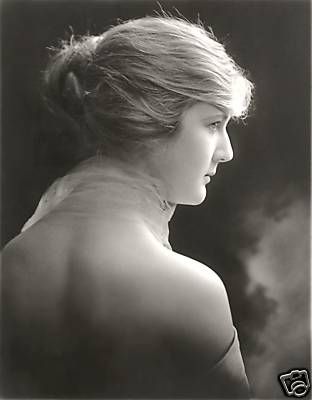
Pawsome Pet Pictures: Greta Garbo.


Personal Quote: I am still a little nervous, a little self-conscious about my English. I cannot express myself well at parties. I speak haltingly. I feel awkward, shy, afraid. In Hollywood, where every teat table bristles with gossip-writers, what I say might be misunderstood. So I am silent as the grave about my private affairs. Rumors fly about. I am mum. My private affairs are strictly private.

Tuesday, October 23, 2012

Camille(1936).


Camille(1936). Director: George Cukor. Produced: Irving Thalberg and Bernard H. Hyman, from a screenplay by James Hilton, Zoe Akins and Frances Marion. The picture is based on the 1852 novel and play La Dame aux Camélias by Alexandre Dumas, fils. Cast: Greta Garbo, Robert Taylor, Lionel Barrymore, Elizabeth Allan, Jessie Ralph, Henry Daniell, and Laura Hope Crews.

The film inspired Milton Benjamin to write a song called "I'll Love Like Robert Taylor, Be My Greta Garbo." Portions of the film, including the final scene, are featured in the 1982 musical film Annie after the number "Let's Go To The Movies."

Marguerite Gautier, is known as "the lady of the camellias" because of her love for the flowers. Marguerite's friends know her as a woman whose heart is bigger than her bank account. Though she is given money and jewels by her many suitors, she has trouble keeping up her lifestyle.

Prudence Duvernoy, comes to Marguerite and tells her, she must find a rich man who can take care of her and arranges for her to meet, Baron de Varville. When Prudence leaves the theater box to find de Varville, Armand Duval, who has been in love with Marguerite and has been following her for weeks, joins her.

Because they have never met, she thinks that he is the baron.


 When she is introduced to the real Baron, Marguerite is disappointed, but she still leaves with him. Soon, Marguerite, becomes de Varville's mistress. When he goes on a business trip to Russia, her frail health keeps her home.

At a coach auction, she meets Armand again and is told by her maid, that he came to ask about Marguerite's health every day.

Later, Marguerite invites him to a party at her home, and when she becomes ill, he carries her into her bedroom and tells her that he is deeply in love with her and wants to take care of her. Marguerite, must choose between the young man who loves her and the baron who wants her.


A very romantic film and one of my favorite Garbo performances. The cinematography and costume design are absolutely beautiful. The supporting performances from Lionel Barrymore, Laura Hope Crewes and Maureen O'Sullivan are perfect. Robert Taylor, is very young and handsome. A wonderful classic film you will not soon forget.

Fun Facts:
Greta Garbo's personal favorite of all her films.
Greta Garbo wore bedroom slippers under all her fancy dresses so she could be comfortable.
Film debut of Joan Leslie.

Elizabeth Allan (9 April 1908 – 27 July 1990) was an English actress who worked in both England and Hollywood, making about 50 films over more than a quarter century.

She made her movie debut in 1931, first appearing in Alibi. 1935 was her most memorable year in Hollywood, when she not only distinguished herself in two memorable Dickens' adaptations as David's young mother in, David Copperfield and as Lucie Manette in Jack Conway's, A Tale of Two Cities, but was also featured in, Mark of the Vampire.

By the 1950s, Allan had made the transition to character parts. Particularly memorable is her appearance in, The Heart of the Matter (1953). In 1958, she appeared as Boris Karloff's wife in, The Haunted Strangler.


Sunday, October 21, 2012

Letter To The Stars Blogathon: Cyd Charisse.


This is my contribution to Letter the Stars Blogathon.

Hosted by: Marcela (Best of the Past): http://best-ofthepast.blogspot.com.br/ Rianna
(Frankly, my dear): http://franklymydear-blog.blogspot.com/
Natalie (On the Mood): http://theswingmood.blogspot.com/

Please click on poster located on side bar to learn more.

Dear Cyd Charisse, I wanted to write to let you know how much I enjoyed watching you perform in one of my all time favorite classic musicals, Singin’ In The Rain. It was a thrill to see one of the best musical numbers ever filmed, “Broadway Melody Ballet” on the big screen.. I have watched Singin’ In The Rain, more times than I can remember and one of the first classic movies, that I added to my ever growing classic movie DVD movie collection.


I have always thought of you as one of the most talented female icons of dance. Because, of all your unforgettable contributions to the Golden Age of MGM Hollywood musicals which include: Silk Stockings, The Bandwagon, Brigadoon and the classic Singin’ In The Rain.

I loved watching your dance performances with two of the greatest male dancers in film history, Fred Astaire and Gene Kelly. How was it acting with Gene Kelly? I've always been a fan of his and if he is starring in a movie, it's guaranteed that I'll be a fan of the film.

My 3 favorite Esther Williams movies are: Fiesta, On an Island with You and Easy to Love. Mostly, because of your dance routines with the very handsome and talented, Ricardo Montalban. You and Ricardo made an amazing dance couple and it seems.. no matter who was your partner, you always remained powerful and glamorous. I was sorry to learn that you broke your leg during the filming of the big ceremonial dance in the classic musical, On an Island with You and they used another dancer.


You would be a perfect celebrity for Dancing With The Stars! Bruno, Carrie and Len would have loved you! You would have definitely taken home the mirror ball!

I would like to end this letter thanking you for your dedication to your dancing and acting. For me... your performances will always remain timeless.

Sincerely yours,
Dawn.

Friday, October 19, 2012

Wise Girl(1937).


Wise Girl(1937). Romantic/comedy. Cast: Miriam Hopkins and Ray Milland.

The story begins when the rich, socialite Susan, travels to the Greenwich Village incognito, to take two little girls' away from the charming artist and free spirit John O'Halloran, who is taking care of his dead brother's two young daughters, so they can be raised by her rich father.

Susan, tries to fit in by pretending to be an out-of-work actress and befriends John, the girls, a boxing sculptor Mike and Karl Stevens, an alcoholic painter.

Susan, soon falls in love with the eccentric John and she tries to talk him into participating in an art contest sponsored by her father, but .. he refuses out of pride.

After, John loses his sign painting job at Walker's department store and then unsuccessfully tries to sell vacuum cleaners door to door, Susan proposes to him and is about to tell him the truth about herself when authorities from the juvenile aid remove the girls from his home.

At the custody hearing, both Susan and John plead their cases to the judges, who grants custody to Susan and her father.

Although, they are well taken of, Katie and Joan miss John. Susan, then comes up with the plan to force John into painting an entry in her father's art contest, so he will have the money to support the girls. Will he come through with the winning painting?

Wise Girl, may not show Miriam Hopkins at her best, but it's a wonderful thirties comedy. Best scene is the chaos she causes at one of Guinn Williams' prizefights. Milland, has some fun scenes as well, especially trying to unsuccessfully sell vacuum cleaners door to door.

Margaret Dumont (October 20, 1882 - March 6, 1965), is remembered mostly for being the comic foil to Groucho Marx in seven of the Marx Brothers films. Groucho called her " the fifth Marx brother."

She was born Daisy Juliette Baker in Brooklyn, New York, the daughter of William Baker and Harriet Anna Harong. As a child Daisy Baker lived in the southern states, where she was mainly raised by her godfather, the writer Joel Chandler Harris.

 Dumont trained as an operatic singer and actress in her teens, and began performing on stage in both America and Europe, under the name Daisy Dumont and later as Margaret (or Marguerite) Dumont.

Her theatrical debut was in Beauty and the Beast at the Chestnut Theater in Philadelphia, and  she also appeared as a singer/comedienne in a vaudeville act in Atlantic City.

She was best known for her vocal and comedic talents in: The Girl Behind the Counter (1908), The Belle of Brittany (1909), and The Summer Widower (1910).

In 1910, she married millionaire sugar heir and industrialist John Moller Jr. and retired from stage work, although she had a small uncredited role as an aristocrat in the film, A Tale of Two Cities(1917).

After her husband's sudden death in 1918, she returned  to the Broadway stage, and soon gained a strong reputation in musical comedy productions. Her Broadway career included roles in the musical comedies and plays: The Fan (1921), Go Easy, Mabel (1922), The Rise of Rosie O'Reilly (1923/24), and The Fourflusher (1925), and she had an uncredited role in the film, Enemies of Women(1923).

She then came to the attention of writer George S. Kaufman, who hired her to play Mrs. Potter, alongside the Four Marx Brothers in their Broadway production of, The Cocoanuts (1925).

In October 1928, the Broadway show, Animal Crackers, opened, and Dumont was again cast as the wealthy society straight woman Mrs. Rittenhouse, in Animal Crackers (1930), Mrs. Gloria Teasdale in Duck Soup (1933), Mrs. Claypool in A Night at the Opera (1935), Emily Upjohn in A Day at the Races (1937), Mrs. Suzanna Dukesbury in At the Circus (1939), and Martha Phelps in The Big Store (1941). Her work in A Day at the Races earned her a Best Supporting Actress Award.

She also played the same dignified dowager in other movies, with W.C. Fields (Never Give a Sucker an Even Break, 1941) and (Tales of Manhattan, 1942), Abbott and Costello (Little Giant, 1946), Laurel and Hardy (The Dancing Masters, 1943), Red Skelton (Bathing Beauty, 1944), Jack Benny (The Horn Blows at Midnight, 1945), Wheeler and Woolsey and George "Spanky" McFarland (Kentucky Kernels, 1934) and (High Flyers, 1937, with Lupe Vélez thrown in for good measure), radio comedian Joe Penner (The Life of the Party, 1937), George "Gabby" Hayes (Sunset in El Dorado), and Danny Kaye (Up In Arms, 1944), and on television with Martin and Lewis (The Colgate Comedy Hour, December 1951).

Dumont also played some dramatic parts, such as Youth on Parole (1937) and Dramatic School (1938). She also appeared in Stop, You're Killing Me (1952), Three for Bedroom C (1952), Shake, Rattle & Rock! (1956), and Zotz! (1962).

Her last movie was What a Way to Go! (1964), in which she played Shirley MacLaine's mother, Mrs. Foster. Eight days before her death she made her final acting appearance on the television program The Hollywood Palace on February 26, 1965, where she was reunited onstage with Groucho—that week's guest host—one final time. They performed material adapted from Captain Spaulding's introductory scene in Animal Crackers. The taped show was aired on April 17, several weeks after her death.

Thursday, October 18, 2012

The Old Maid (1939).


The Old Maid (1939). Director: Edmund Goulding. The screenplay by Casey Robinson is based on the 1935 Pulitzer Prize-winning play of the same title by Zoë Akins, which was adapted from the 1924 Edith Wharton novella The Old Maid: the fifties.

On the day of Delia Lovell's wedding to socially prominent Jim Ralston, Clem Spender, to who Delia had once been engaged, reappears after being gone for two-years. Delia's cousin Charlotte, who was also in love with Clem, slips away to console him, coming home very late that night.

The next day Clem enlists in the Union army and dies on the battlefield.

Four years later, Charlotte has made a home for war orphans. Tina, Charlotte and Clem's own daughter comes to live with her. Charlotte lives with her secret until the day she is to marry Jim's brother Joe. Delia, who still loves Clem, decides to destroy Charlotte's chance to marry Joe and Charlotte goes into seclusion.

She reappears several months after Jim has died in a riding accident, and accepts Delia's invitation to move into the Ralston mansion with Tina.

Over the years Tina, considers Delia to be her mother, while Charlotte has become a miserable woman. Delia adopts Tina legally to provide her with a name.

On the eve of her wedding, Charlotte insists on telling Tina her true identity. Will Charlotte be able to keep her secret forever hidden?

I thought both Davis and Hopkins were amazing in this passionate film with many pull on your heart string scenes. Davis is wonderful in her transformation from beautiful debutante to embittered old maid. This movie reminded me of what a good actress Miriam Hopkins really was.

Miriam Hopkins (October 18, 1902 – October 9, 1972). At the age of 20, she became a chorus girl in New York City. In 1930, she signed with Paramount Pictures, and made her official film debut in, Fast and Loose.

Her first great success was in, Trouble in Paradise (1932). During the remainder of the decade, she appeared in such films as: The Smiling Lieutenant and Dr. Jekyll and Mr. Hyde (both 1931), Design for Living (1933), Becky Sharp (1935), for which she was nominated for the Academy Award for Best Actress, Barbary Coast (1935), These Three (1936) (the first of four films with director William Wyler) and The Old Maid (1939).

Hopkins had well-publicized fights with Bette Davis (Davis was having an affair with Hopkins' husband at the time, Anatole Litvak), when they co-starred in their two films: The Old Maid (1939) and Old Acquaintance(1943). Davis admitted to enjoying very much a scene in Old Acquaintance in which she shakes Hopkins. After Old Acquaintance, she did not work again in films until The Heiress (1949).

In The Mating Season, she gave a comic performance as Gene Tierney's character's mother. She also acted in The Children's Hour, which is a remake of her film These Three (1936). In the remake, she played the aunt to Shirley MacLaine, while MacLaine took Hopkins' original role.


Wednesday, October 17, 2012

Pawsome Pet Pictures: Greer Garson.


Personal Quote: (In a 1990 interview, Garson deplored the violence of many modern films) "I think the mirror should be tilted slightly upward when it's reflecting life -- toward the cheerful, the tender, the compassionate, the brave, the funny, the encouraging, all those things -- and not tilted down to the gutter part of the time, into the troubled vistas of conflict."

Monday, October 15, 2012

A Tribute to Mary MacLaren

-->
A Tribute to Mary MacLaren


Born in Pittsburgh, Pennsylvania on January 19, 1896, Mary MacLaren was barely pretty, but she had the appearance of an average working-class girl. Director Lois Weber found the actress easy to direct and was impressed by her ordinary features. As a result, Mary was perfect for the lead in Shoes (1916) where she is a shop girl.


It was a heartrending melodrama that might have been over the top were it not for Weber’s direction and Mary’s performance. Weber directed Mary again in Idle Wives (1916) , Wanted –a Home (1916), and The Mysterious Mrs. M. (1917), in which the actress had the opportunity to play a lighter role.

Weber brought out in Mary a talent that others could not discern. David O. Selznick was particularly harsh, stating that Mary could not act. However, audiences enjoyed Mary’s performances because she seemed able to weep profusely on camera.


Persuaded by her sister, actress Katherine MacDonald not to renegotiate a Universal contract, and unable to come to terms with Paramount, Mary became an independent player in the late teens, but she was unsuccessful at finding adequate roles.

Mary’s last prominent appearance is as the queen of France in Douglas Fairbanks’ production of The Three Musketeers (1921). Mary’s last silent film is The Dark Swan (1924), in which she is seventh billed. In 1924, Mary married a British colonel George H. Young and moved with him to India. The marriage was not successful and the couple divorced. 


Mary returned to the screen in 1933 as a bit player in more than seventy-five films made over the next two decades. In the late 1940’s, Mary began operating the home in which she had moved in 1917 in Hollywood as a boarding house. She sank slowly into poverty.

Mary was involved in automobile wrecks in 1946 and 1961. In 1965, Mary married Robert S. Coleman, a blind amputee veteran of World War I. She described it as a “marriage of mercy.” In 1981, a fire destroyed the upper floor of Mary’s house.  

A visit to Mary’s house after the fire was certainly an experience. She would sit down on the decomposing couch on the front porch. Mary also slept on a rotted mattress with her five dogs and four cats. The welfare of the animals was far more important to Mary than her wellbeing, and whatever money was available, she spent on them.

In December 1983, the house in which Mary had lived for 65 years was auctioned off. Mary passed away on November 9, 1985 as a resident of the Virgil Convalescent Hospital. She was eighty-nine years old. 

It is very sad that the 1929 stock market crash wiped Mary’s fortune and in her final decades she was declared incompetent and living like a bag lady while her sister actress Katherine MacDonald died in luxury. It’s also ironic that Mary was a more talented actress than Katherine.